This is the story I bring to every stage, every retreat, and every conversation — not because it's extraordinary, but because it's proof of something ordinary and miraculous: people can begin again.
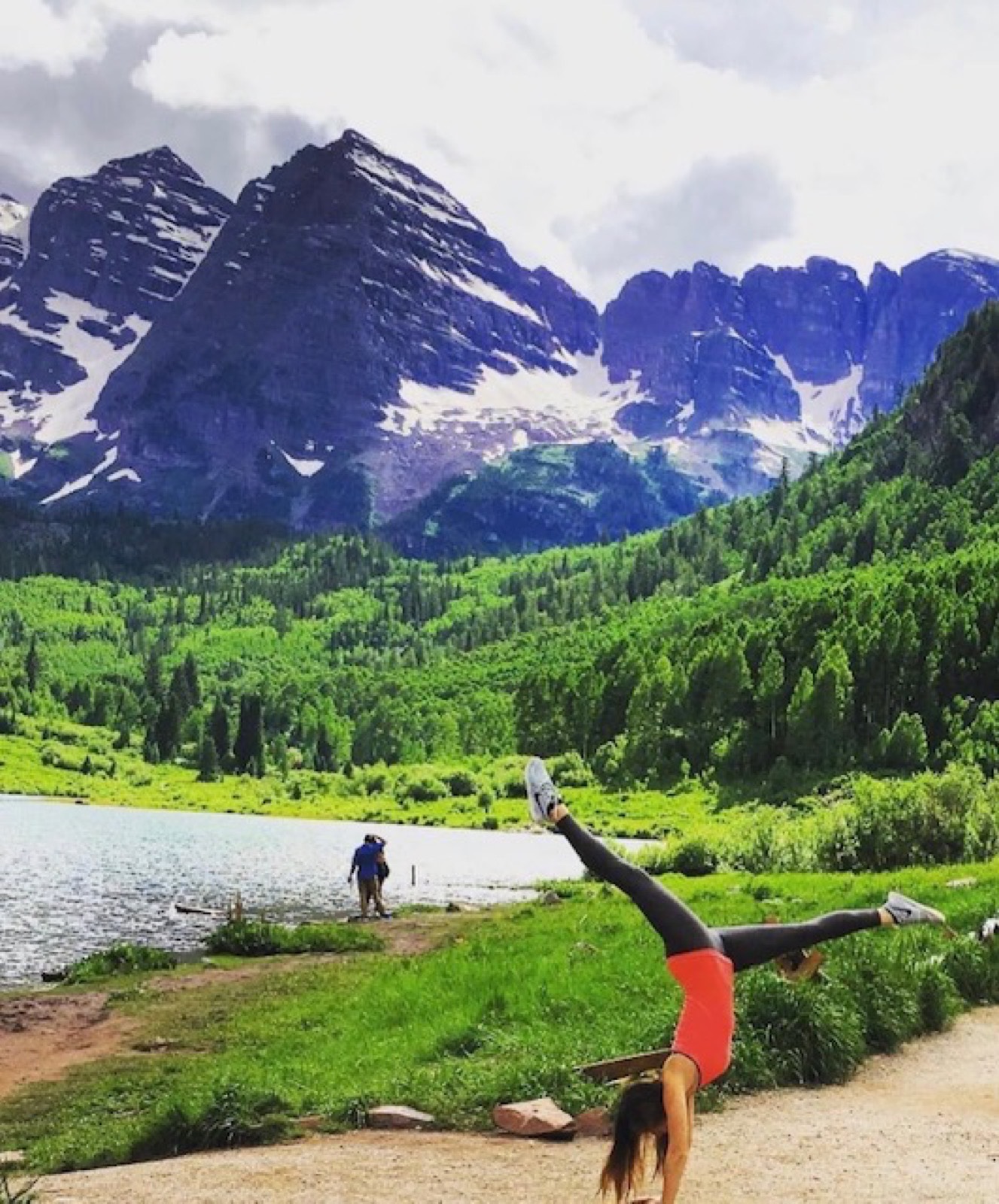
Before anything else, I was a gymnast. I grew up in Wisconsin in a world of chalk dust, early mornings, and the stubborn belief that if you practiced something long enough, your body would learn to do impossible things. That belief became my first career — years spent coaching young athletes, building teams, and discovering that what I loved even more than the sport was the community around it.
Movement was my identity. My body was the instrument I trusted most in the world.
Which is part of why what happened next took so much from me.
A life-changing accident redrew the map of my body and my future in an instant. The athlete who trusted her body completely suddenly couldn't trust it to get through a normal day. There was no dramatic movie-moment of acceptance — just the slow, disorienting realization that the old life wasn't coming back.
Chronic pain is a strange kind of grief — you mourn someone who is still technically here. For years I lived in a body that hurt, in a loop of specialists, treatments, good days that fooled me and bad days that humbled me. I kept working, kept showing up, kept smiling in rooms where no one knew what it cost me to be standing there.
I learned things in those years I wouldn't wish on anyone and wouldn't trade for anything: how to endure, how to ask for help, how to find slivers of joy inside limitation.
Grief rarely arrives on schedule, and it doesn't wait for you to finish the last one. Losses stacked on losses — of people, of identity, of the future I'd assumed was mine. There was a season when I felt like I was made mostly of goodbyes.
What carried me wasn't a breakthrough. It was people. A handful of humans who kept showing up, who let me be a mess, who reminded me that connection isn't a luxury for when life is good — it's the raft you cross the hard part on.
Major surgery gave me a real shot at recovery — and recovery gave me something I hadn't felt in years: a future with room in it. Rebuilding my strength taught me the same lesson gymnastics had, from the other side: bodies and lives are rebuilt the same way, one unglamorous rep at a time.
Healed enough to choose again, I made the biggest bet of my life: I left everything familiar and moved to Los Angeles to build a life centered on the things that had actually saved me — community, connection, creativity, and purpose.
I founded my own company, began producing gatherings and experiences that bring people together, and started telling my story out loud — first in living rooms, then on stages and podcasts. It turns out the story I was most ashamed of was the one people most needed to hear.
Today I speak, write, host retreats, and build communities for people standing where I once stood — at the edge of an unwanted new chapter, wondering if there's anything good on the other side. There is. I've seen it. I live in it.
Healing didn't give me my old life back. It gave me the courage to build a truer one.Kate Vollmer
I'd rather tell you the messy truth that helps than the shiny version that doesn't. Real stories, told honestly, are what make people feel less alone.
Nobody heals alone, and nobody should have to. I build rooms — literal and figurative — where people find their people.
Optimism means more coming from someone who's been through it. I don't offer platitudes — I offer what actually worked, and the honesty about what didn't.
I share the unabridged version — the setbacks, the lessons, the practical tools — from stages, on podcasts, and at retreats.
Invite Kate to Share It